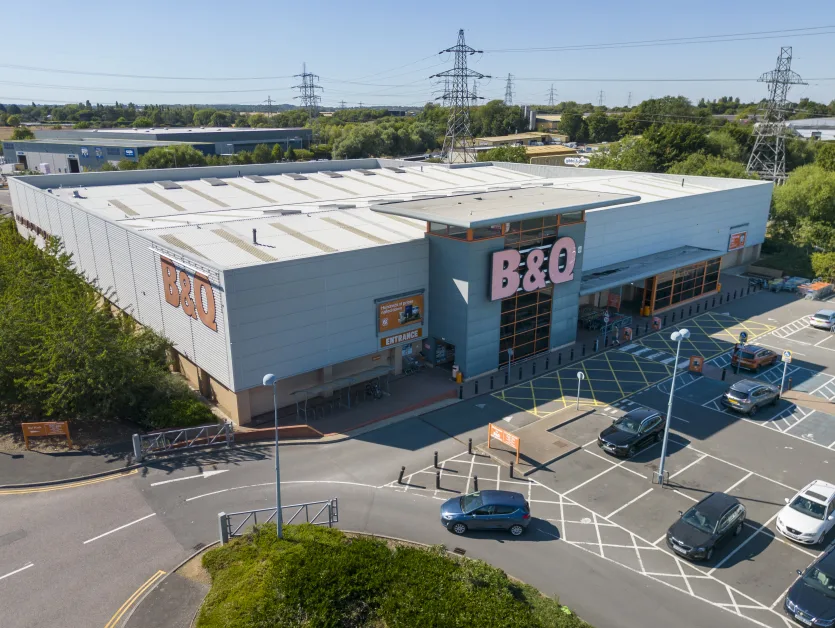
The Roman farm beneath B&Q in Eaton Socon
Next time you pop into B&Q on the southern edge of Eaton Socon for paint, compost or a bag of screws, spare a thought for what lies underneath the car park. Around 1,800 years ago this patch of ground was busy with cattle and sheep, crisscrossed by ditches and hedges, and part of a carefully managed Roman farming landscape stretching right across the Great Ouse valley.
We know this because, before the site was developed, archaeologists from Wessex Archaeology spent the winter of 2000 to 2001 excavating it. Their findings were later published by the Cambridge Antiquarian Society, and they paint a fascinating picture of everyday rural life here in Roman Britain.
Priors Gate, before the shops
The dig took place at a site known as Priors Gate, at the junction of what were then the A45 and B1428, just south of Eaton Socon village and around 2.5km south west of St Neots town centre. The ground sits on a gravel terrace of the River Great Ouse, with the Colmworth Brook running just to the north.
The site was first spotted from the air, where cropmarks hinted at buried field boundaries. The excavation was commissioned on behalf of the developers as part of the planning process, and carried out between December 2000 and February 2001.
A farm built for livestock
What the team uncovered was not a village or a villa, but a working agricultural landscape in use from the late 1st century to the 4th century AD, at its busiest in the late 2nd and early 3rd centuries.
In its early years the land supported small scale mixed farming. People grew spelt wheat, along with peas and celtic beans, cutting their crops low to the ground with a sickle and processing small batches of grain as they needed it.
Then, some time in the 2nd century, the whole landscape was reorganised. Small paddocks were swept away and replaced with large enclosures, each more than half a hectare in size, laid out alongside a broad droveway. That droveway narrowed from around 14 metres to 10 metres as it ran north towards the brook, perfect for funnelling animals down to water. Smaller ditches inside it may have been used to sort animals into groups, such as separating lambs from ewes, and one gully may have held a hurdle so the drove could be blocked off when needed.
The archaeologists concluded that the farm had become a “producer site”, rearing cattle and sheep to supply people living in larger, less rural settlements further afield. The animals kept and eaten locally tended to be older beasts, suggesting they had spent years providing milk, wool and pulling power before ending up on the table.
Watering holes, windbreaks and a few surprises
Some of the most evocative finds came from two shallow watering holes. One, more than 5 metres across, had waterlogged layers that preserved leaves, twigs, oak bark, worked wood and the only tool found on the site, an iron punch. Seeds of duckweed, and even tiny beetles that feed on it, show these pits held still, standing water.
Two curved gullies, first thought to be the remains of roundhouses, turned out more likely to be animal shelters or windbreaks, as there were no hearths and very little rubbish around them. Insect remains suggest the timber buildings where people actually lived stood nearby, probably just to the south of the dig.
Other finds included a Colchester type brooch, a handful of coins including one of the emperor Valens from the AD 360s and 370s, samian tableware imported from Gaul, and a scattering of fine pottery alongside everyday kitchen wares made in Cambridgeshire. There was also evidence that horse meat may occasionally have been eaten, something unusual in Roman Britain.
Part of a much bigger picture
Priors Gate was just one piece of a much wider Roman countryside. Similar field systems and droveways have been found across the river at Eynesbury, at Little Paxton and at Cambourne, and the old line of the Great North Road nearby would have helped farmers get their produce to market. Archaeologists even suggest that the gravel quarry pits found on the site may have been dug to build or repair roads in the area.
The excavation was also important because it pushed back the story of Roman Eaton Socon. Until then, most Roman sites known around Eaton Socon and western Eynesbury dated from the late 3rd and 4th centuries. Priors Gate showed that farming here began much earlier, in the later 1st century.
Read the full report
If you’d like to dig deeper, the full report, A Romano-British rural site at Eaton Socon, Cambridgeshire by Catriona Gibson, is available to read free on the Wessex Archaeology website. It’s a reminder that some of St Neots’ most interesting history is hiding in the most ordinary places, sometimes right under the trolley bay.

