 Cambridgeshire Community Archive Network
The Limes: the long story of 44-46 Huntingdon Street
Walk north up Huntingdon Street and, just before the Splash Park, you’ll pass a long, low building with a run of gables, sash windows and a pale blue limewashed front sitting right on the pavement. Many people in St Neots will know it as the old RAFA club. Fewer will know it by its original name, The Limes, or that it has been part of the town’s story for well over two hundred years.
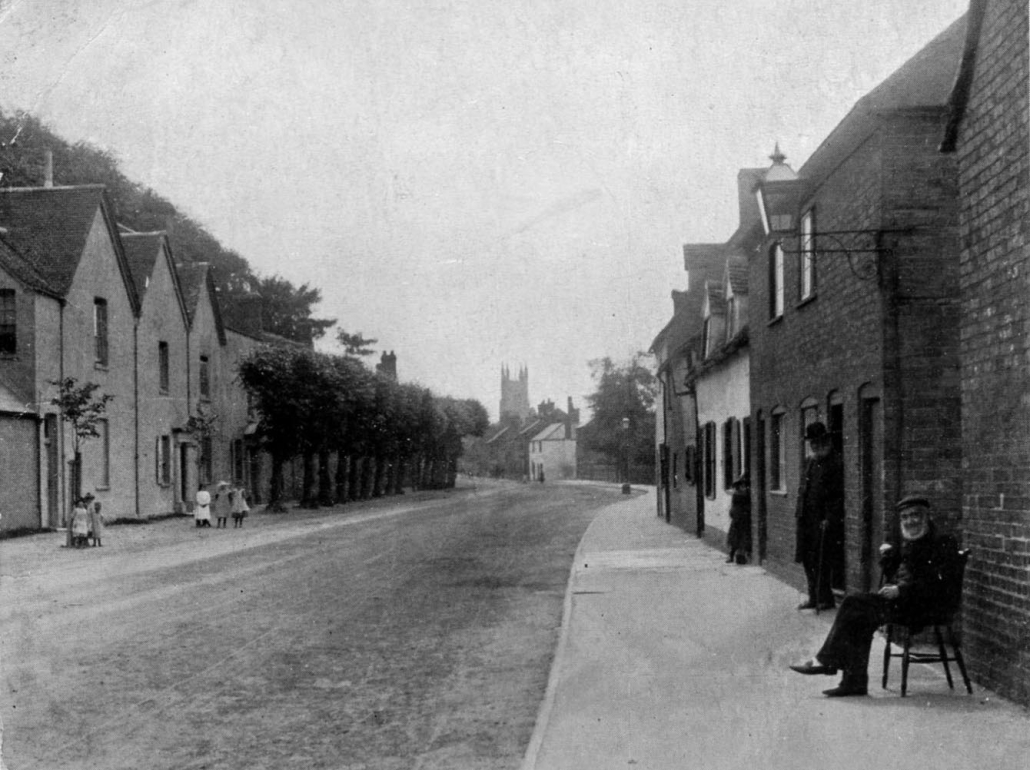
The Limes was built as a single, substantial home. Its front is 18th-century in style, though the timber frame behind it may well be older, a pattern seen across St Neots where Georgian frontages were often added to earlier buildings. Its size and its prominent spot on the main road north out of town suggest it was built for a prosperous family at a time when the Great North Road was bringing stagecoaches, the Royal Mail and a good deal of wealth through the town. Photographs from around 1900 show a row of lime trees in front of the house, which almost certainly gave it its name.
The people who lived here offer a lovely snapshot of Victorian St Neots. In 1874 and 1875 a Miss Chapman advertised in the local papers, offering lessons in French, German, drawing and dancing from the house. By 1881 it was home to John McNish, a local brewer and miller, along with his family and four servants, and ten years later Charles Malden, a brewery manager, had moved in with a household of his own. The brewing connection is no coincidence. By the 1880s, the town supported brewing, paper milling and engineering, and its business families wanted homes to match.
Towards the end of the 19th century, the Limes was divided into two houses, Nos. 44 and 46. By 1911, No. 44 was the home and workshop of John Wright, a taxidermist, who lived there with his wife Susan and their granddaughter, a reminder of how varied the street had become, with trades and families living side by side.
In the mid-20th century, the building moved from family life to community life. It became the base for the Royal Air Forces Association and the Air Gunners Association, part of the wave of veterans’ clubs set up across the country after the Second World War. Known for a time as the Astra Club, it hosted reunions, meetings and community events for decades, and the light blue limewash on the front is said to reflect RAF colours. The club closed its doors in 2023.
The Limes was listed at Grade II in March 1974 and sits on the northern edge of the St Neots Conservation Area, acting as a gateway into the historic town. Together with its neighbour The Globe (now Victor Chan restaurant), another 18th-century Grade II listed building, it is one of the few survivors of the old streetscape at this end of town. What makes it special is less any single feature and more the way it carries its whole history in plain sight. You can still read the original house in its gables and windows, the point where it was split in two, and the later additions made for the club, while the rear shows a more decorative face, with bay windows in the gables and sashes from the 1890s to 1910s.
The next chapter is now being written. A planning application is currently with Huntingdonshire District Council to convert the building into homes, so The Limes may soon return to the residential use it was built for. In the meantime, it’s well worth pausing outside, perhaps alongside The Globe, to picture the lime trees, the brewers’ households and the airmen’s reunions that have all passed through its doors.

